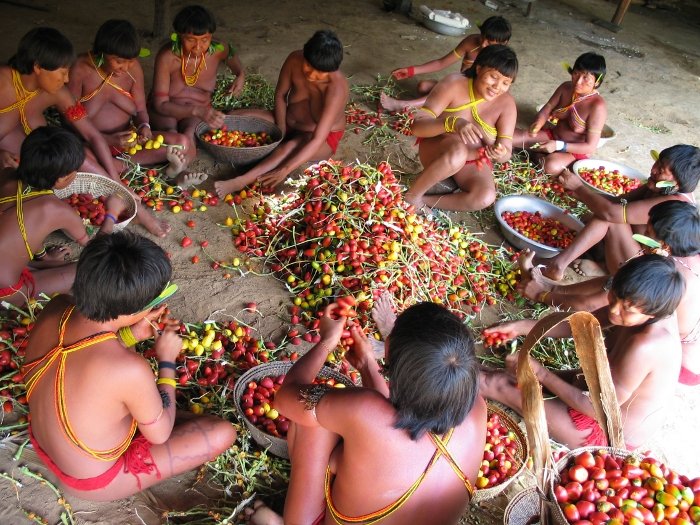
When the Portuguese arrived on the Brazilian coast in the beginning of the 16th century, they encountered a land already inhabited by indigenous peoples. There might have been at the time around 2,000 tribes with a total population of aproximately 10 million indians according to Funai. Each Indian tribe had their own eating habits and diet, which varied somehow from tribe to tribe. However, as a whole their diets were very similar as can be seen in the different literature available as for example articles by Luís da Câmara Cascudo em História da Alimentação no Brasil.
Fruit was abundant- pineapple, avocado, ‘biriba’, ‘abiu’, bananas and plantains to name but a few, and the native Indians ate them, but also used them to make ‘fermented wines’ . They didn’t have to plant them as there were fruit trees everywhere something which up to this day is seen in many Brazilian cities. They also fed on a variety of palm fruits – pupunha, tucumã, bacaba, and many more. Nut trees such as the cashew tree played an essential part in their diet, and in fact, cashew was so important that some of the tribes along the coast would fight over it. One of the attractive factors about cashews was that the cashew apple could be eaten raw or turned into juice.
Fish held a significant place in their diets, and quite often was dried by either roasting or smoking the fish. After the drying process, it would be ground up and stored for long periods.
Hunting was done primarily by tribes that inhabited the central lands, and the dead animals would be eaten once they were roasted. Wild boars, caititus and queixadas were abundant. When they dried the meat, it would be pounded with cassava meal to make something called paçoca which is still eaten to this day. In the Amazon region, the diet of the local tribes included snakes, lizards, caimans and various types of turtles.
Insects were also eaten as another source of protein: yellow termites, large female ants, beetles, grasshoppers and larvae. Honey was also part of their diet. Before becoming familiar with sugar cane, arrived in the early 16th century, they would take the honey from the beehives using fire to trick the bees out of the hive to get the honey they needed, always leaving some behind to ensure continuity. Another thing they used to do was to roast some of the bees on stones to feed themselves.
The seasoning used by the native Indians included a variety of chillies – different colours, flavours and scent. They used salt to an extent, but primarily on the coast where they evaporated seawater. In the interior, they used to extract salt from the ashes of burning wood such as the heart of palm of certain palm trees rich in potassium.
Through fermentation, the Indians made beverages. There was a type of wine called generically in the Tupi language as cauim or cahoi. Saliva would be the fermentation trigger of many things like corn, cassava, cashew, ‘jenipapo’, ‘jabuticaba’, ‘mangaba.
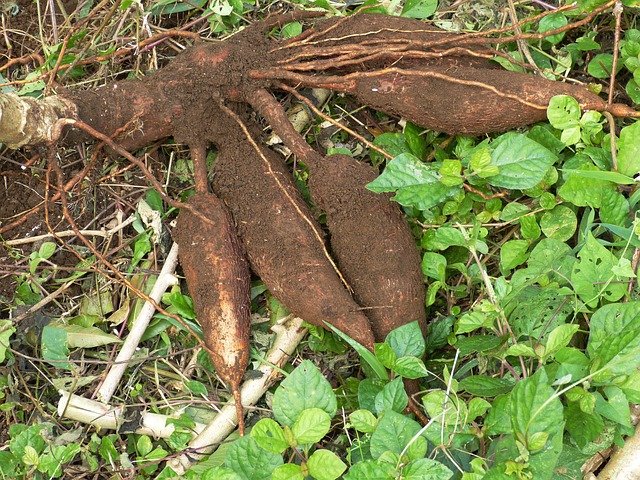
The native Indians staple diet, their ‘bread’, was cassava which they farmed. Once harvested, after grating and then pressing the cassava, they would make a variety of products. When the cassava pulp is pressed, the solid part is used to make ‘beijus’ which are essentially baked pulp, that look like unleavened bread. The liquid from the pressing was poisonous at the initial raw stage. After fermenting and then boiling it for a long time, they would use it in a non-alcoholic drink or to prepare a broth with some root vegetables, fish or even meat. In North Brazil, you still can find a dish called tacacá which resembles this broth.
There is so much more to be said about how the Brazilian Indians cultivated, harvested, transformed and consumed cassava. Many of the cassava by products and preparations are still made exactly how the Indians have done for a long time. Cassava has shaped the Brazilian gastronomy and we want to honour and showcase how it’s happened in the following articles.
Leave a Reply